September 24, 2026 · Ricardo Amenabar
The jaguar's cave: the history of Chalabal Estrella since 1880
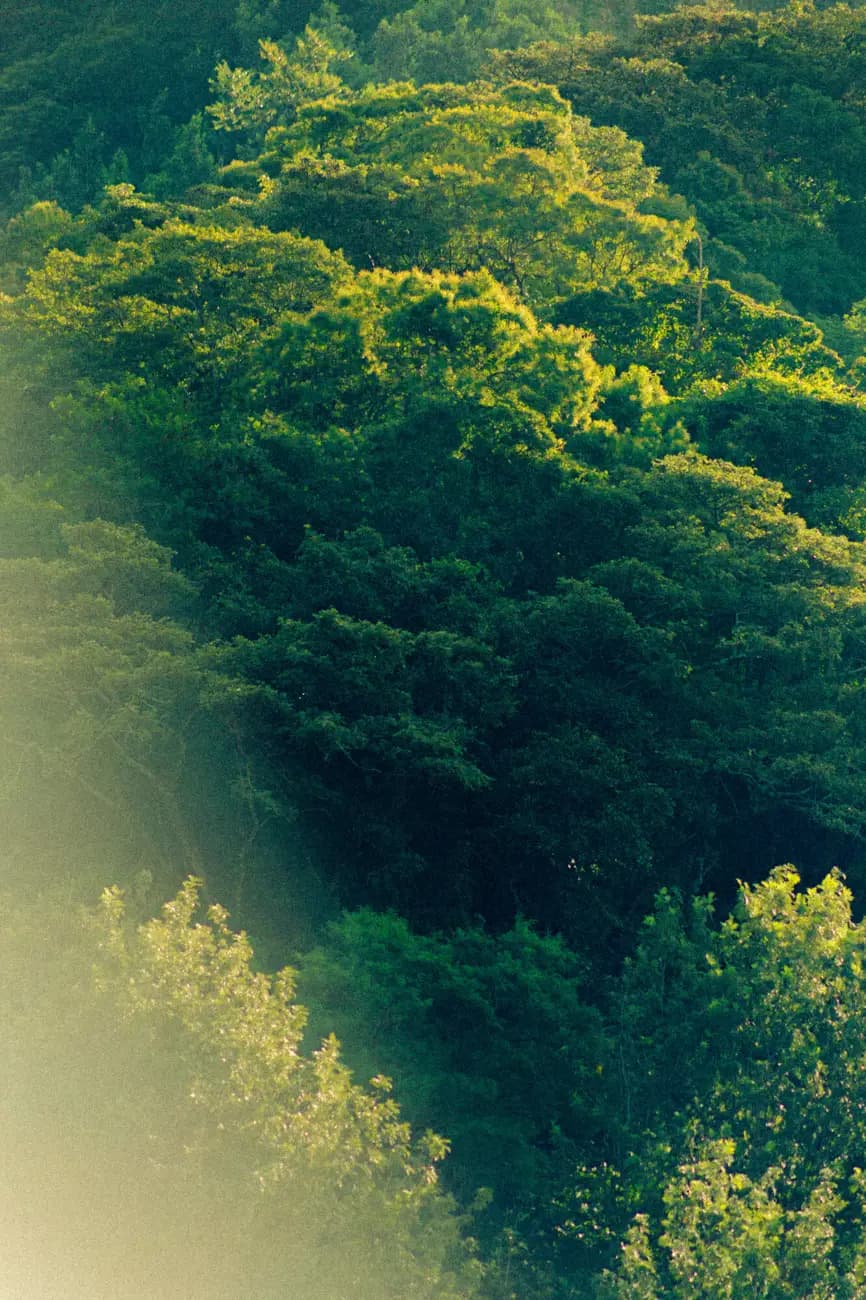
In 1880, this land already had a name: Chalabal, “the jaguar's cave” in the Mayan language. Chalabal Estrella is a coffee farm in the municipality of Acatenango, Chimaltenango, Guatemala, with records of coffee growing since that year. My family has cared for it since 1930, and today I run it with my father: I am the fourth generation.
This is its story, with the dates we know.
What are the key dates in the farm's history?
| Year | What happened |
|---|---|
| 1880 | First records of coffee growing on the farm, under its first owner, Jorge Bulnes. It was already called Chalabal. |
| 1930 | Miguel Soto, my great-grandfather, acquires the farm. From that year on, a mountain on the farm is called La Campana. |
| 1976 | The earthquake brings down everything. My grandmother Nydia raises the farm from the rubble, and two years later the wet mill is working again. |
| 1985 | The land is divided and the upper part becomes Chalabal Estrella. My father modernizes it. |
| 2020/21, 2021/22, 2023/24 and 2024/25 | Our La Campana lot places second in the Acatenango Valley category of Anacafé's coffee competition. |
| Today | I run the farm with my father. I am the fourth generation. |
1880: where does the name Chalabal come from?
The first records of coffee growing on the farm date from 1880, under its first owner, Jorge Bulnes. Even then it was called Chalabal, “the jaguar's cave” in the Mayan language, because these slopes were jaguar territory.
By then, coffee already ranked first among Guatemala's exports, and its cultivation was spreading across the country. Today we also call this farm the cave of coffee.
1930: who was Miguel Soto?
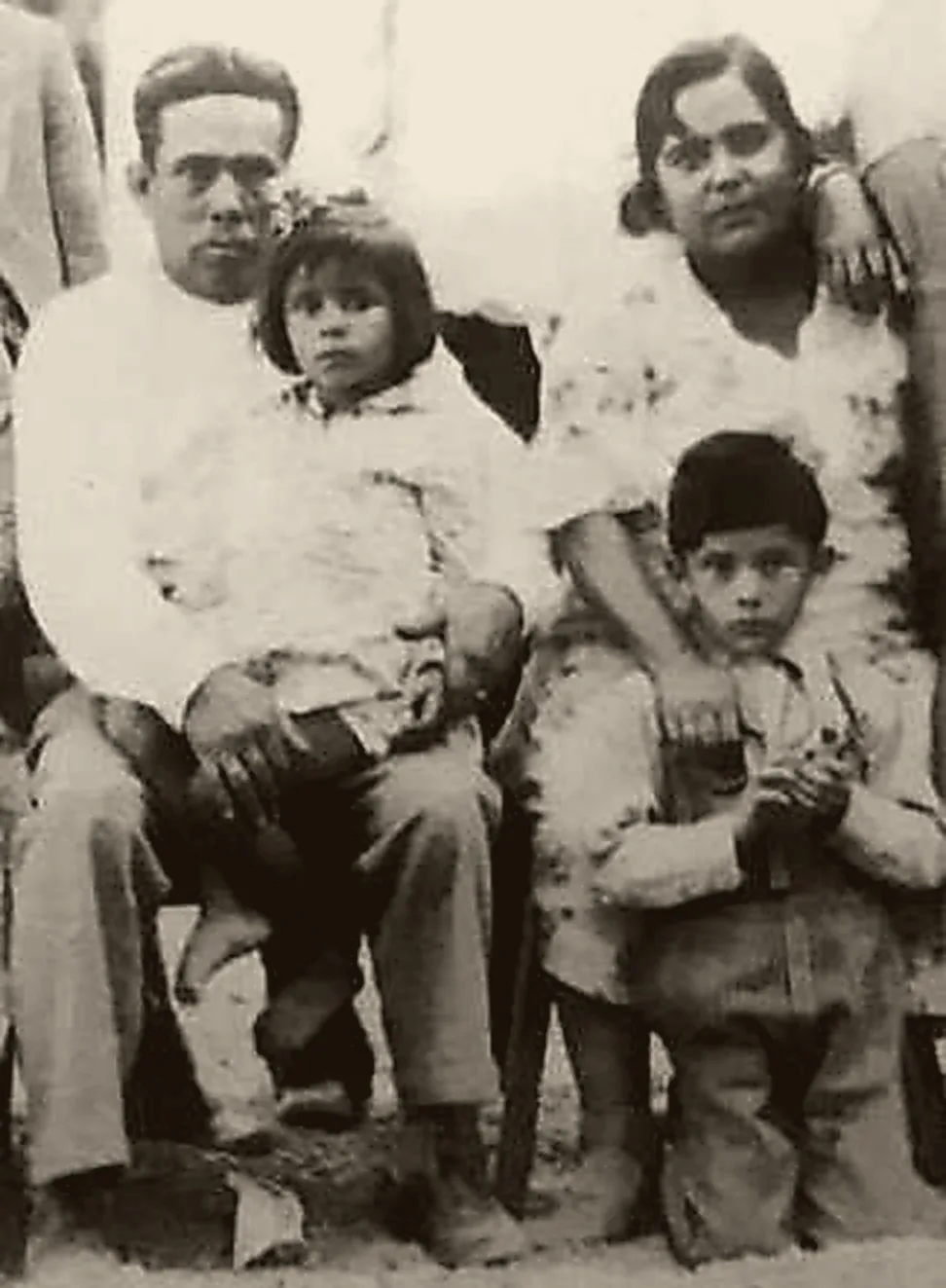
In 1930 the farm was acquired by Miguel Soto, my great-grandfather, a renowned coffee grower. He modernized the wet mill and brought order to the plantation, and Chalabal's coffee began to earn a name in the region.
1976: what did the earthquake do to the farm?
In the early hours of February 4, 1976, a magnitude 7.5 earthquake shook Guatemala. More than 22,000 people died across the country. On the farm, it brought down everything generations had built.
My grandmother Nydia raised the farm from the rubble: those were hard times, and she carried them with a serene strength that still guides us. Two years later, the wet mill was working again.
When I say that quality is never added at any stage, that it can only be protected, I am also talking about this. Some things are protected for decades.
1985: how was Chalabal Estrella born?
In 1985 the land was divided and the upper part became Chalabal Estrella.
My father modernized it with a simple idea: produce better by caring more. He brought water recycling to the wet mill and renewed the coffee plots, a renewal that continues today.
What is La Campana?
Part of the farm is a mountain shaped like a bell. It has been called La Campana, “the bell”, since 1930, and we grow avocado and coffee on it.
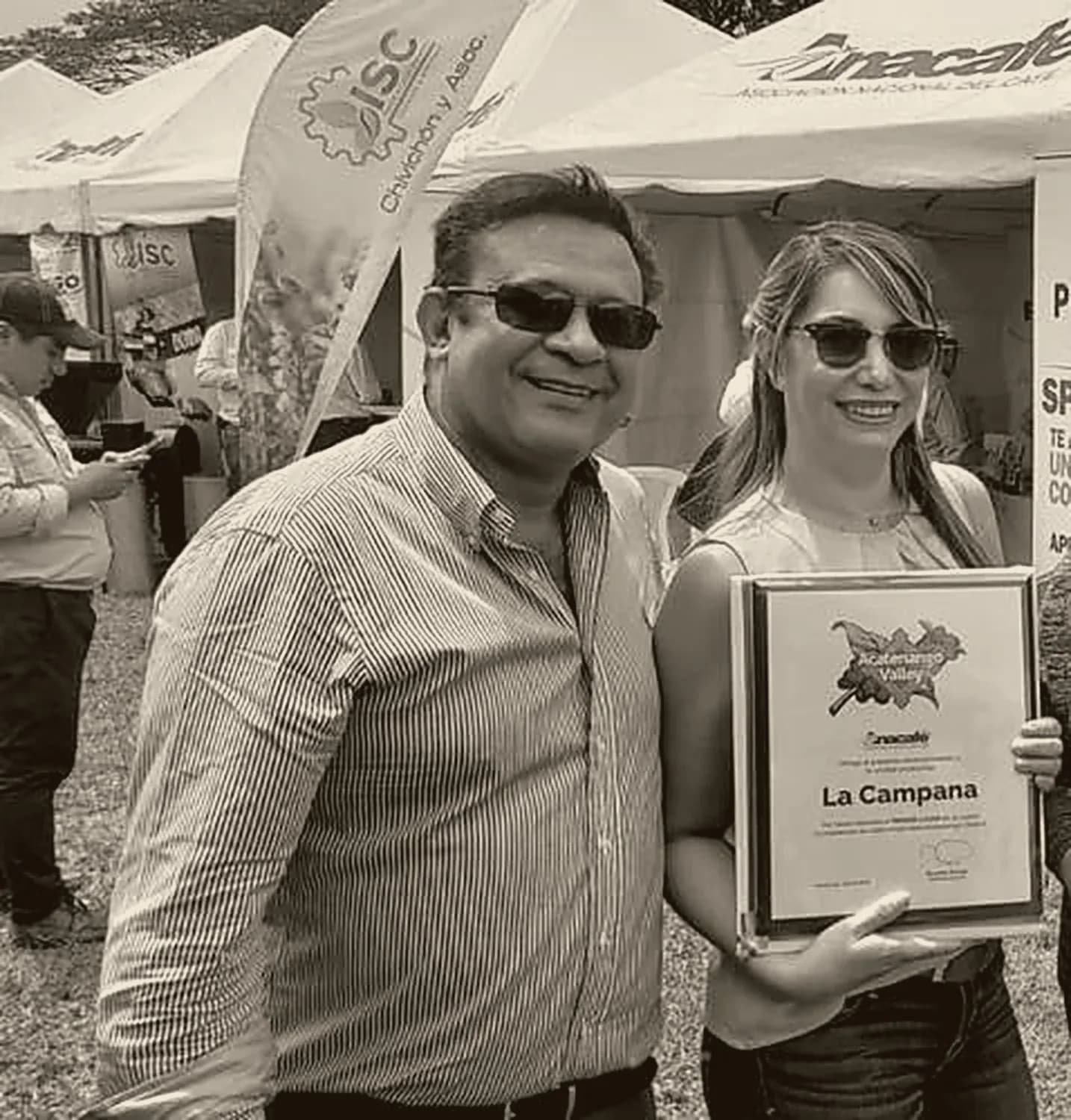
In Anacafé's coffee competition, Acatenango Valley category, our La Campana lot placed second in four harvests: 2020/21, 2021/22, 2023/24 and 2024/25, with a washed Catuai scoring 85.63 to 86.50. In the results Anacafé publishes, our coffee appears under the lot's name: La Campana.
What is the farm like today?
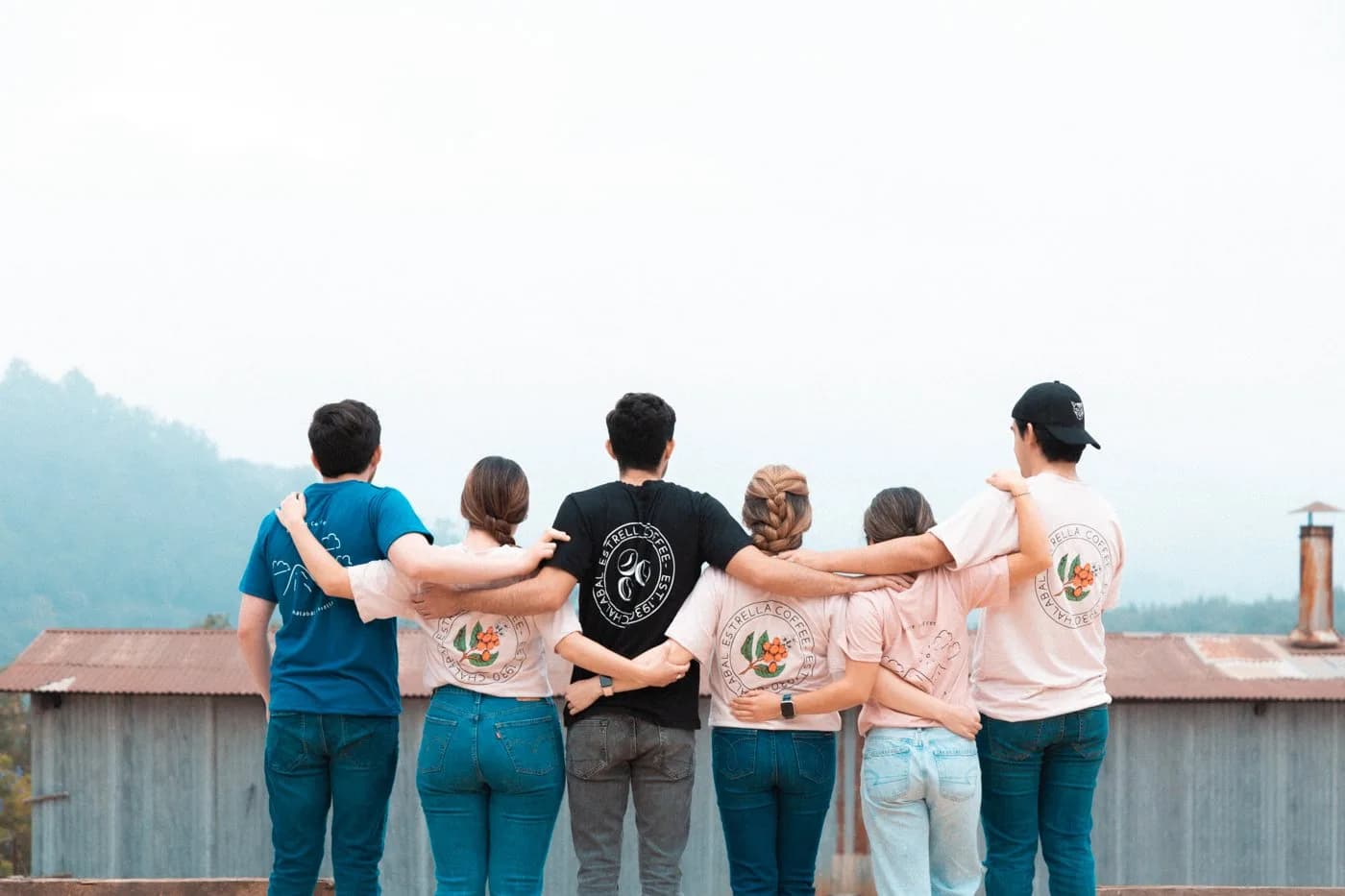
My father and I keep looking for better results, with one focus that does not change: people first. The farm brings piped water to around 200 families in two neighboring communities, and the farm workers have housing, drinking water, electricity, internet and activities for their families.
| Fact | Chalabal Estrella today |
|---|---|
| Location | Municipality of Acatenango, Chimaltenango, Guatemala, with Volcán de Fuego in view |
| Altitude | 1,600 to 2,100 masl, volcanic soil |
| Area | About 180 hectares (4 caballerías, a traditional Guatemalan land measure) |
| Varieties | Catuai, Bourbon, Geisha, Pacamara and Anacafé 14, grown under shade |
| Harvest | By hand, December to April |
| Processing | Our own wet mill, the same day the coffee is picked, with recycled water; washed as standard |
| Export | Green coffee (café oro), under an Anacafé producer-exporter (Productor-Exportador) license |
| Markets | We have exported to the United States, Spain, Italy and Taiwan; today, to the United States |
Today we also roast coffee for sale in Guatemala, in 400-gram bags: Catuai, Bourbon and a special edition Geisha. It is the same coffee we export green.
Why tell this story?
Anyone who buys coffee has the right to know where it comes from. Not just which region: which farm, which mountain, which family.
Chalabal Estrella is not a brand placed on top of a generic origin. It is a place with records since 1880 and four generations of one family who have cared for it.
If you want to taste what this mountain can do, start with our catalog. And if you would like to visit the farm, write to hola@chalabalestrella.com or message us on WhatsApp at +502 30121394: we welcome visits arranged in advance.
Frequently asked questions
- What does Chalabal mean?
- Chalabal means “the jaguar's cave” in the Mayan language, because its slopes were jaguar territory. The farm already had that name in 1880, the year of the first records of coffee growing there, under its first owner, Jorge Bulnes.
- How old is Chalabal Estrella?
- The first records of coffee on the farm date from 1880, under Jorge Bulnes. The current family acquired it in 1930. In 1985 the land was divided and the upper part became Chalabal Estrella.
- Where is Chalabal Estrella?
- In the municipality of Acatenango, department of Chimaltenango, Guatemala, with Volcán de Fuego in view. The coffee grows from 1,600 to 2,100 masl, in volcanic soil.
- What is La Campana?
- It is part of Chalabal Estrella: a bell-shaped mountain, called La Campana since 1930, where avocado and coffee are grown. Under that name, the La Campana lot placed second in the Acatenango Valley category of Anacafé's coffee competition in 2020/21, 2021/22, 2023/24 and 2024/25.
- Who runs the farm today?
- Ricardo Amenabar, the family's fourth generation, together with his father. The family has cared for the farm since 1930: Miguel Soto, Ricardo's great-grandfather, acquired it; Nydia, Ricardo's grandmother, raised it from the rubble after the 1976 earthquake, and Ricardo's father modernized it from 1985 on.
Sources
- Chalabal Estrella: Our farm (timeline)
- Anacafé: 2020-2021 Regional Competitions winners, Acatenango Valley category (ranking published without scores, in Spanish)
- Anacafé: 8th Regional Competition, Región III, 2021-2022 harvest (in Spanish)
- Anacafé: 10th Coffee Competition, Región III, 2023-2024 harvest (in Spanish)
- Anacafé: 11th Coffee Competition, Región III, Acatenango Valley category (May 2025, in Spanish)
- USGS: M 7.5, Guatemala, February 4, 1976
- USGS Professional Paper 1002: The Guatemalan earthquake of February 4, 1976
- Regina Wagner, Historia del café de Guatemala (Anacafé, 2001): introduction (in Spanish)
- Anacafé: history of Guatemalan coffee (timeline)