September 24, 2026 · Ricardo Amenabar
What coffee cupping scores mean (and what ours say)
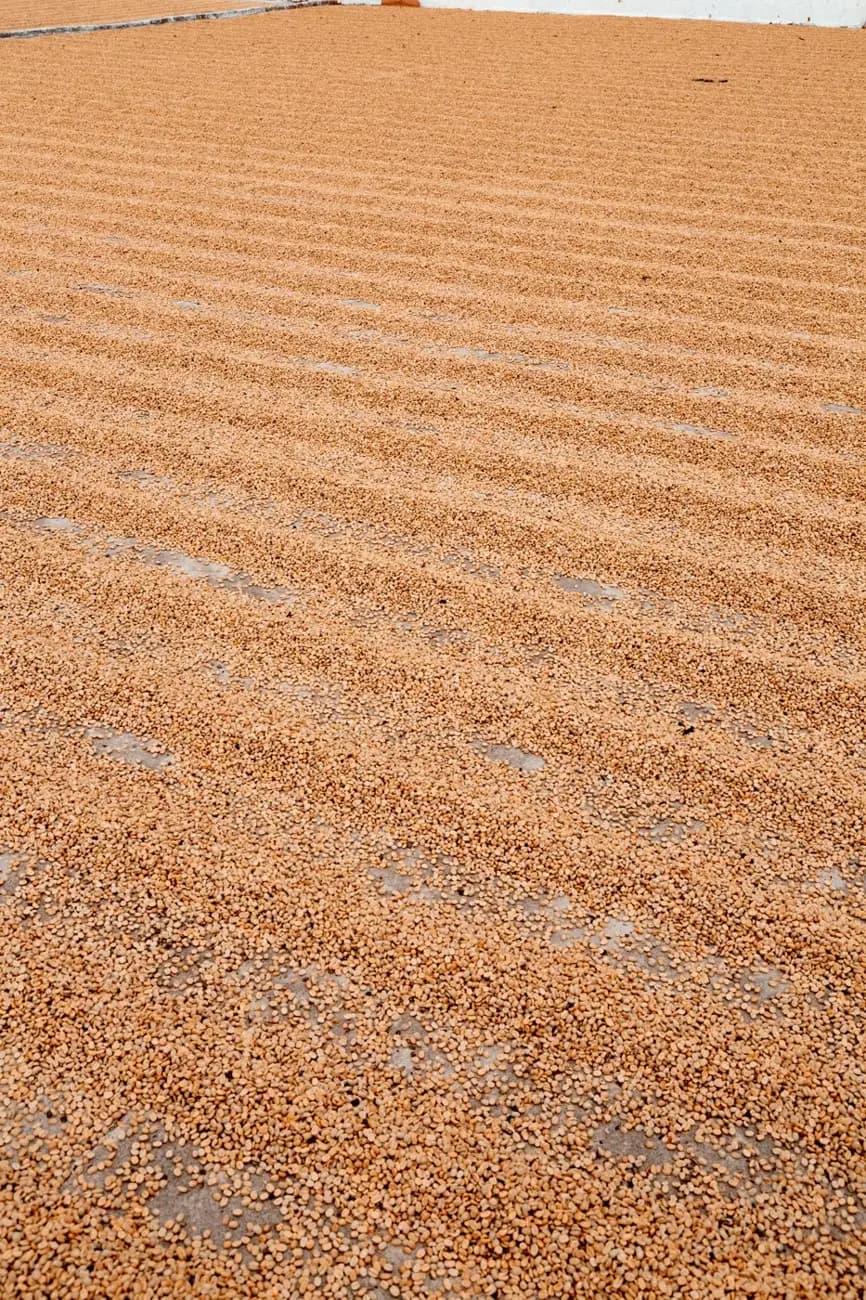
A cup does not speak in numbers; a panel translates it into one. A cupping score is the grade out of 100 that trained tasters give a coffee under a standardized protocol. On the SCAA's 2004 form, specialty starts at 80: 80 to 84.99 is “very good”, 85 to 89.99 “excellent” and 90 or more “outstanding”. Our La Campana lot scored between 85.63 and 86.50 in four harvests of Anacafé's competition.
What is coffee cupping?
Cupping is the standardized method for evaluating a coffee in the cup. The idea is simple: prepare the coffee the same way every time, so the only thing that changes is the coffee.
The SCAA cupping protocol fixes the variables. The coffee is roasted light to light-medium within the 24 hours before cupping and rests for at least 8 hours. The ratio is 8.25 grams of whole-bean coffee per 150 milliliters of water, poured at about 93 °C. The cup steeps undisturbed for 3 to 5 minutes. Then the crust is broken, the foam is skimmed and the coffee is tasted with a spoon, first hot and then as it cools, because acidity and sweetness change with temperature. At least five cups are prepared from each sample, to evaluate uniformity.
In competitions and formal evaluations, cupping is blind: the taster does not know which farm each cup comes from. That is what gives the number its weight.
How is the 100-point score calculated?
For twenty years the standard was the 2004 cupping form of the SCAA, the predecessor of today's Specialty Coffee Association (SCA). It evaluates ten attributes.
Seven are scored on a scale that in practice runs from 6 to 10 points, in steps of 0.25: fragrance and aroma, flavor, aftertaste, acidity, body, balance and overall. Three are judged cup by cup, with 2 points for each cup that shows the attribute, up to a maximum of 10: uniformity, clean cup and sweetness. Defects are subtracted from the total: 2 points for each cup with a taint and 4 for each cup with a fault.
Under this system, an 86 equals an average of 8 across the seven scaled attributes, with all five cups uniform, clean and sweet, and no defects. A 90 requires an average close to 8.6.
In 2023 the SCA introduced a new system, the Coffee Value Assessment (CVA), which separates what the old form mixed together. In November 2024 it adopted the descriptive and affective assessments as standards; the extrinsic assessment was published as a standard in 2025. The CVA has four parts:
- Physical: color, defects, moisture content and bean size.
- Descriptive: which attributes the cup has and at what intensity, on a 0 to 15 scale, without judging whether they are good or bad.
- Affective: the taster's impression of quality, on a 9-point scale for eight attributes. An SCA calculator converts the result to the 100-point scale.
- Extrinsic: what lies outside the cup, such as certifications, origin traceability and processing information.
With the CVA, the SCA defines specialty coffee by its distinctive attributes and higher market value, not by a minimum score. Even so, many buyers still use 80 as a reference point.
In practice, both systems coexist today. Since October 2025 the Q Grader program has worked with the CVA, some labs still rate coffee on the 2004 form, and Cup of Excellence uses its own form. When someone gives you a score, ask which form it came from.
What does an 80, an 85 or a 90 mean?
The second column gives the official descriptors of the 2004 form. The third is a common trade reading, not an SCA standard.
| Range | 2004 form descriptor | Common reading in the market |
|---|---|---|
| Below 80 | Below Specialty Quality | It can be a sound cup, but it is not specialty |
| 80 to 84.99 | Very Good | Specialty; some importers direct it to blends |
| 85 to 89.99 | Excellent | Many importers associate it with single origins |
| 90 to 100 | Outstanding | Presidential Award at Cup of Excellence |
Arithmetically, the score is a linear sum. In price, the last few points weigh far more. At Cup of Excellence, a lot needs 87 points or more to win and reach the auction, and lots at 90 or more receive the Presidential Award. At the 2025 Guatemala edition, the winner, a washed Geisha from Huehuetenango, scored 91.15 points and sold at auction for US$143.10 per pound. Tenth place, a washed Pacamara from Palencia at 87.50, sold for US$19.20 per pound. Less than four points apart, more than seven times the price.
Two warnings. First: the form's resolution is 0.25 points, and the same coffee cupped by two panels can vary by about a point without anyone making a mistake. Second: a 90 is not better for every use. For a house blend, a roaster may prefer a stable 86 available in volume to a 90 that exists in only a few bags.
How do you read a score? Five questions
A number without context says little. Before comparing two coffees by score, ask:
- Who cupped it? A competition panel, a Q Grader, the producer or the importer.
- On which form? The 2004 form, the CVA affective assessment or a competition's own form.
- From which sample? Offer, pre-shipment or arrival. A coffee can lose quality in transit if it is stored badly. More in how to import green coffee from Guatemala.
- From which harvest? A score describes one harvest, not a farm forever.
- At which roast? Cupping uses a standardized light roast. The coffee you buy roasted to your taste cannot be compared directly with that number.
What scores has our La Campana lot earned?
La Campana is a bell-shaped mountain inside the farm, where we grow avocado and coffee. It has carried that name since 1930, and it is the name under which our lot appears in Anacafé's results.
In Anacafé's coffee competition (Competencia de Café, formerly the Regional Competitions), Región III, Acatenango Valley category, our La Campana lot placed second in four harvests: 2020/21, 2021/22, 2023/24 and 2024/25. All four were washed Catuai.
| Harvest | Place | Score |
|---|---|---|
| 2020/21 | Second | 86.00 (farm record) |
| 2021/22 | Second | 85.63 |
| 2023/24 | Second | 86.25 |
| 2024/25 | Second | 86.50 |
Anacafé published the 2020/21 ranking without scores; the 86.00 for that year is our own record. Documentation of these results is available to verified commercial buyers.
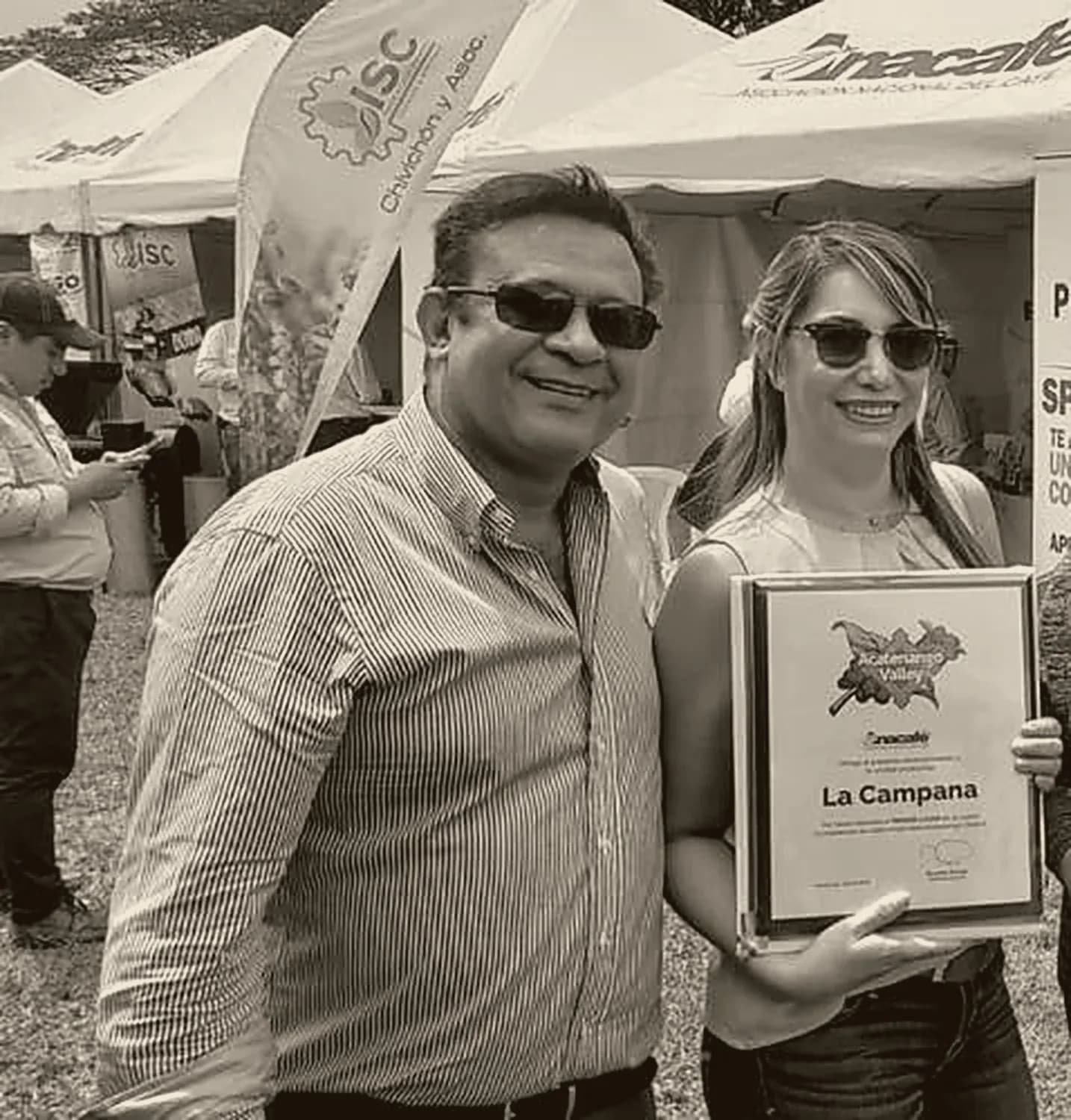
What we say about these numbers: four harvests, four results between 85.63 and 86.50. The variation between harvests is under one point.
What we do not say: that an 86.50 in 2024/25 guarantees the same number this year. That is why we cup every lot to verify its quality, with samples roasted on a sample roaster, and export only our best coffee.
Are tasting notes and scores the same thing?
No. A score measures quality; tasting notes describe character. An 84-point coffee can show chocolate and orange notes just like an 88. The difference usually lies in the clarity, intensity and cleanness with which they appear.
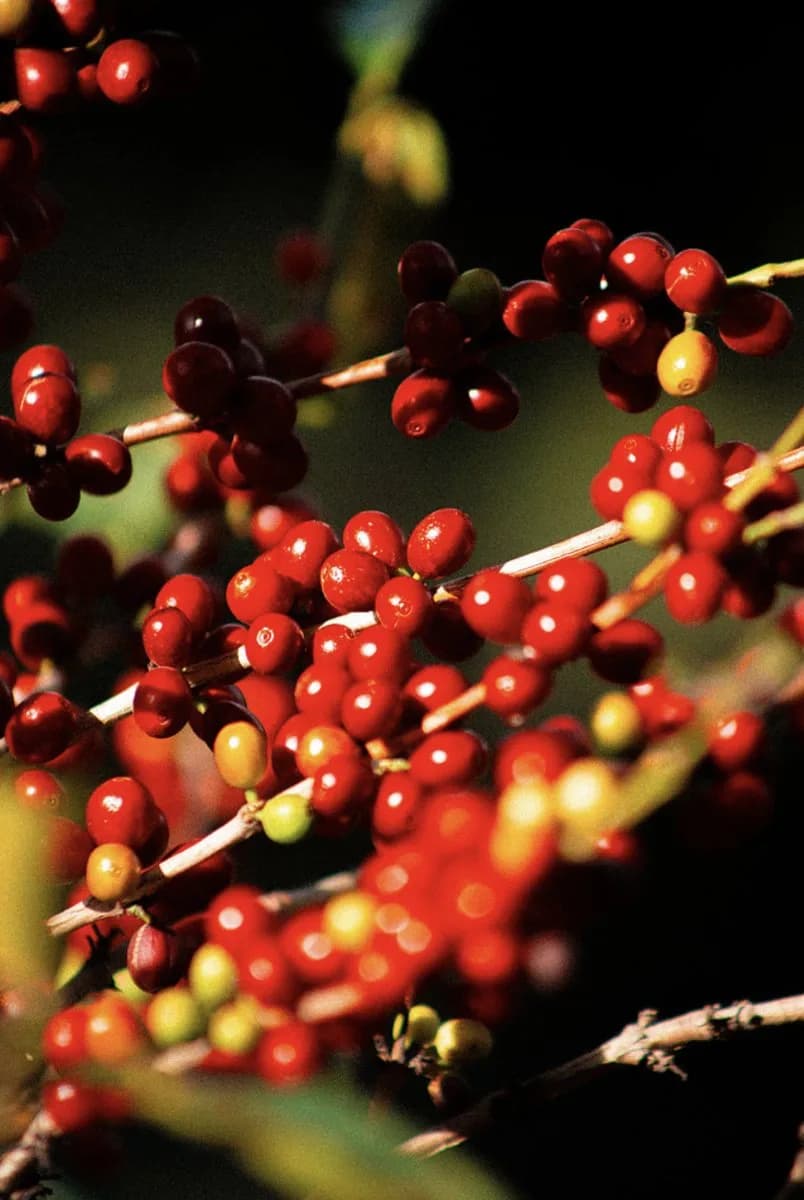
Our Catuai shows caramel, chocolate, plum, almond, orange and grapefruit; our Bourbon, caramel, chocolate, nuts, lime and red apple; our Geisha, almond, caramel, chocolate, plum and lime. These are the notes of our retail roasted coffee in Guatemala, made from the same coffee we export green: descriptions, not scores. The CVA formalized that distinction by separating the descriptive assessment from the affective one.
What comes before the number?
On the farm, quality is never added at any stage: you can only protect what the mountain already put there. Our coffee grows under shade, between 1,600 and 2,100 masl. It is processed the same day it is picked, with recycled water, and every lot is cupped. We tell that story in From cherry to green gold. The score comes at the end, once that work is done.
If you are a roaster or international buyer, let's talk green coffee: write to hola@chalabalestrella.com or on WhatsApp at +502 30121394, or see our export formats. And if you would rather start with the cup, start with our catalog.
Frequently asked questions
- What is a good cupping score?
- On the SCAA's 2004 form, specialty starts at 80 points: 80 to 84.99 is “very good”, 85 to 89.99 “excellent” and 90 to 100 “outstanding”. The SCA's CVA no longer defines specialty by score, although many buyers still use 80 as a reference point.
- Is a 90-point coffee always better than an 86?
- On the cupping table, a 90 should be noticeably better. For a business, not always: a roaster may prefer a stable 86 available in volume for a house blend. Also, the same coffee can vary by about a point between two panels.
- Who can give a cupping score?
- Any trained taster. The scores that carry the most weight come from competition panels, importer labs and Q Graders, professionals certified to evaluate, describe and communicate coffee quality using international standards. Since October 2025, the SCA has run the Q Grader program based on the CVA.
- What is the difference between the 2004 form and the CVA?
- The SCAA's 2004 form mixed description and preference across ten attributes and produced a score out of 100. The SCA's CVA separates four assessments: physical, descriptive, affective and extrinsic. Only the affective assessment produces a result that converts to the 100-point scale.
- How did Chalabal Estrella's La Campana lot score?
- In Anacafé's coffee competition, Región III, Acatenango Valley category, Chalabal Estrella's La Campana lot, a washed Catuai, placed second in four harvests: 2020/21 (86.00, farm record), 2021/22 (85.63), 2023/24 (86.25) and 2024/25 (86.50).
Sources
- SCAA, Cupping Protocols (Cupping Committee, 2005)
- Coffee Enterprises: quality rating scales of the 2004 form and the CVA
- Specialty Coffee Association: Coffee Value Assessment
- Specialty Coffee Association: coffee standards
- Specialty Coffee Association (LinkedIn): publication of a new CVA standard (November 2025)
- Daily Coffee News: SCA officially adopts new cupping forms and standards (November 2024)
- Daily Coffee News: SCA officially launches Q Grader courses tied to the CVA (October 2025)
- Specialty Coffee Association: Q Grader program
- Alliance for Coffee Excellence: Cup of Excellence rules and protocols
- Alliance for Coffee Excellence: Cup of Excellence Guatemala 2025 results and auction
- Royal Coffee: scoring specialty coffee, what do the numbers mean
- Perfect Daily Grind: should specialty coffee start at 84 points? (November 2024)
- Sustainable Harvest: pre-shipment and arrival samples
- Anacafé: 2020-2021 Regional Competitions winners, Acatenango Valley category (ranking published without scores, in Spanish)
- Anacafé: 8th Regional Competition, Región III, 2021-2022 harvest (in Spanish)
- Anacafé: 10th Coffee Competition, Región III, 2023-2024 harvest (in Spanish)
- Anacafé: 11th Coffee Competition, Región III, Acatenango Valley category (May 2025, in Spanish)