September 24, 2026 · Ricardo Amenabar
How to buy and import green coffee from Guatemala: a guide for first-time buyers
Green coffee travels with two pieces of luggage: its cup and its paperwork. To import green coffee from Guatemala you need three things: an exporter licensed by Anacafé, an importer of record in your country (yourself, or someone acting for you) and a calendar. You do not need to fill a container to start: a microlot can travel in courier boxes or on a consolidated pallet.
We are four generations of coffee growers in Acatenango and have exported to the United States, Spain, Italy and Taiwan; today, to the United States.
When is Guatemalan coffee harvested and shipped?
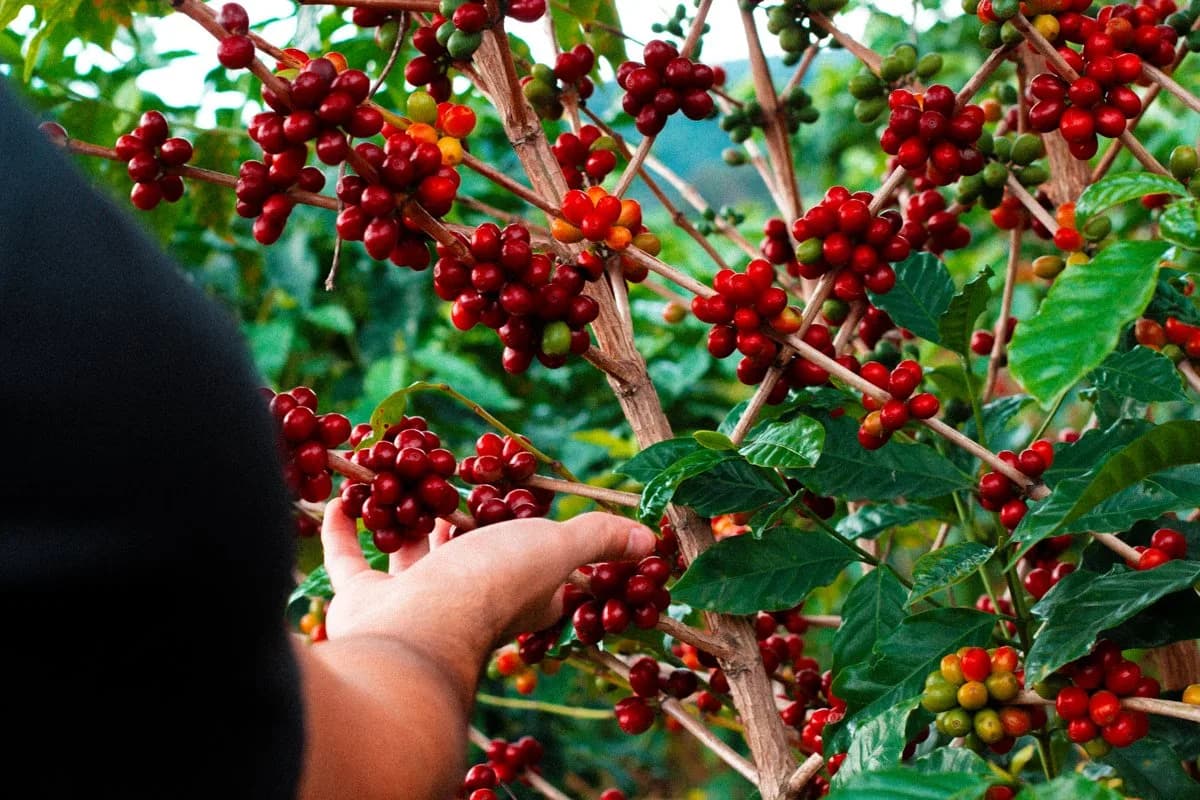
Harvest. In Guatemala it runs roughly from November to April, later in the higher zones. On our farm, between 1,600 and 2,100 masl, we harvest from December to April: by hand, cherry by cherry, from coffee grown under shade. The coffee is processed the same day it is picked.
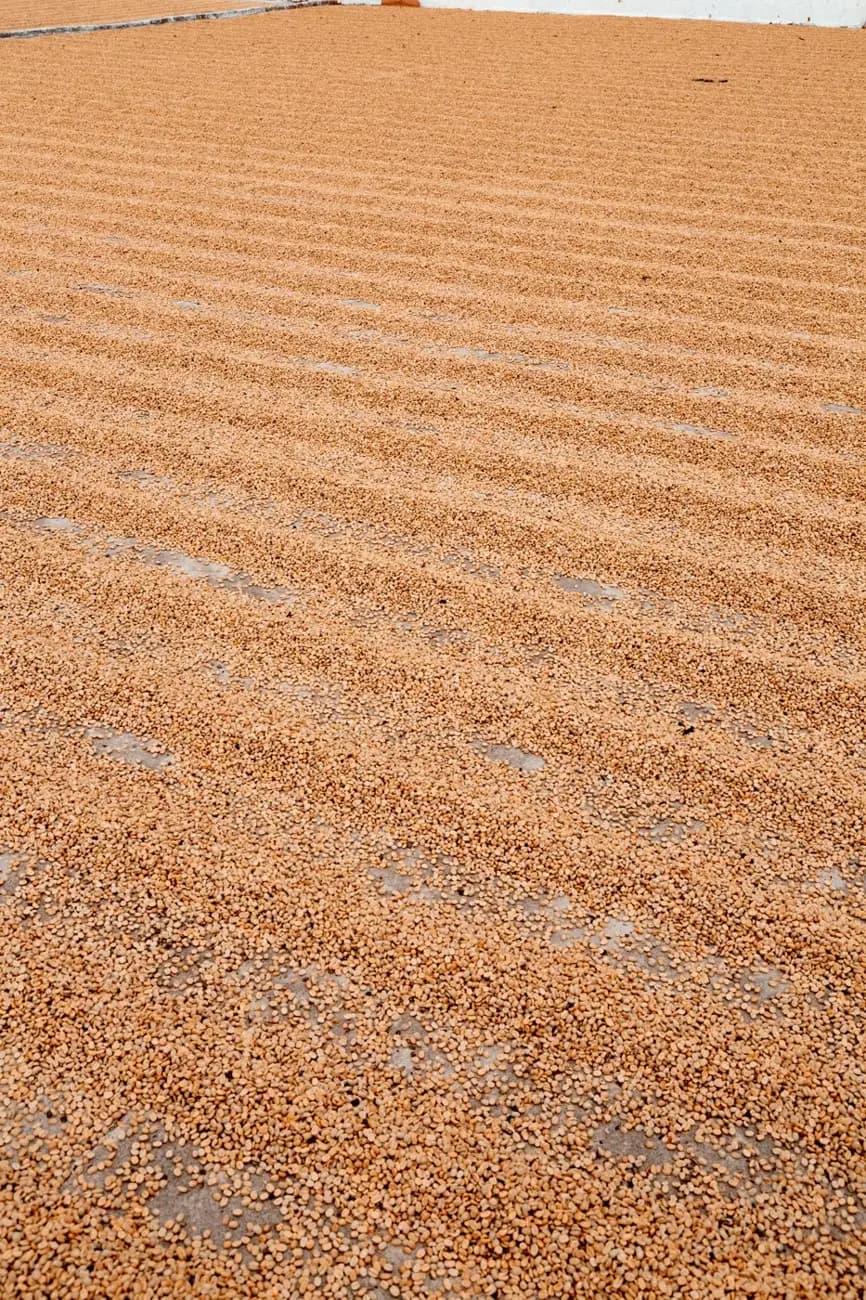
Rest. In Guatemala, coffee is dried to 10 to 12% moisture, the range Anacafé recommends, and it is common practice to let it rest for several weeks in parchment before milling. We follow the journey from cherry to green coffee in From cherry to green gold.
Dry milling. Next, the parchment is removed, the beans are sorted, defects are taken out and the coffee is bagged in 69 kg sacks (152 lb), Guatemala's export standard.
Shipping. Most new-crop coffee leaves between spring and summer in the northern hemisphere. Transit ranges from one or two weeks to the United States to several weeks to Europe. If you want a specific lot, ask for samples early, while the coffee is still resting.
Microlot or container? How much coffee can you buy?
It depends on your volume. The figures are approximate.
| Format | Approximate volume | How it travels |
|---|---|---|
| Nanolot or microlot by courier | One box or several | Air courier, door to door |
| Microlot on a pallet | For example, 5 to 20 bags (345 to 1,380 kg) | Consolidated cargo: LCL by sea, or air cargo |
| 20-foot container | 250 to 275 bags of 69 kg (17,250 to 18,975 kg) | Ocean freight, usually FOB a Guatemalan port |
In 2020, Anacafé announced a partnership with FedEx for micro and nanolots, with special rates for its members: boxes of up to 68 kg on the standard services, no limit on boxes per shipment, tracking and door-to-door delivery. Ask your exporter whether it is still running.
We produce around 2,200 quintales of parchment coffee a year; exportable volume for each harvest is confirmed on request. We sell microlots and special lots, separated by variety and process and selected on the cupping table, and container volumes under a supply program, with single-farm traceability. Details on our export page.
How do samples work?
Nobody buys green coffee without cupping it. The trade's usual process has three samples:
- Offer sample: a few hundred grams, representative of the lot. You cup it and decide.
- Pre-shipment sample (PSS): drawn from the prepared lot before shipping, to confirm it matches the offer. Depending on the contract, it is approved in writing.
- Arrival sample: taken by the importer at the warehouse, to check how the coffee traveled.
In each one, check moisture (reference: 10 to 12%), bean size, defects per 300 grams (350 under the SCA protocol) and, above all, the cup. Ask for the score, the form used and who cupped it; our guide to cupping scores explains how to read it.
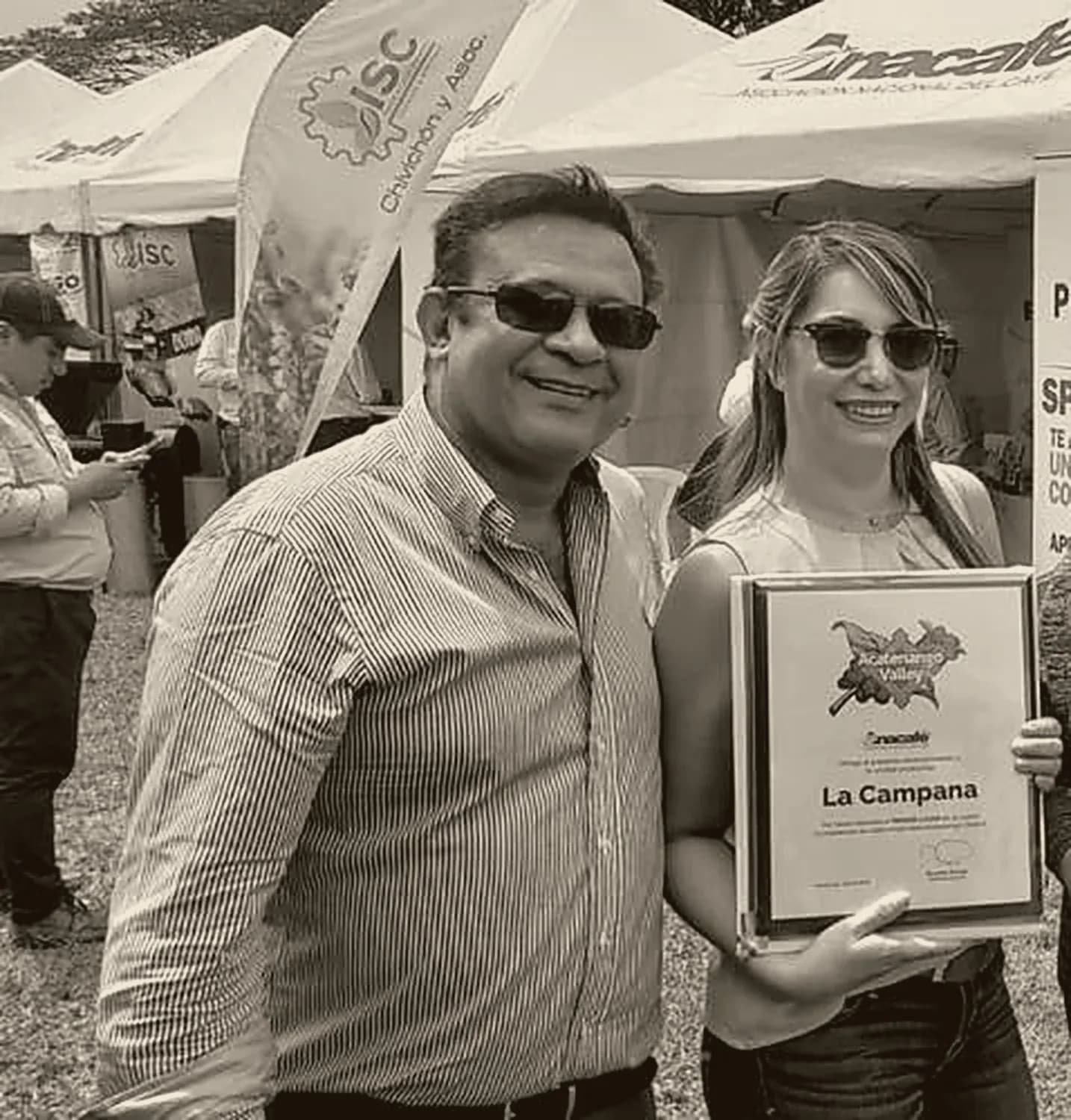
At Chalabal Estrella we cup every lot to verify its quality, because we export only our best coffee. In Anacafé's coffee competition, Acatenango Valley category, our La Campana lot placed second in four harvests: 2020/21, 2021/22, 2023/24 and 2024/25, with a washed Catuai scoring 85.63 to 86.50. La Campana is a bell-shaped mountain inside the farm.
What documents does a green coffee export from Guatemala need?
On the Guatemalan side, the exporter handles all of it. Knowing the list still helps you ask for the right papers:
- Anacafé export license. There are several types, including Productor-Exportador (producer-exporter: it exports only its own production, and it is the one we hold) and Comprador-Exportador (buyer-exporter). It runs from October 1 to September 30 and is renewed every year.
- Anacafé shipping permit (permiso de embarque), one for each export.
- Anacafé certificate of origin, for every export; if the buyer asks, an EUR.1 for the European Union as well.
- Phytosanitary certificate from the Ministry of Agriculture (MAGA), processed through the single export window (VUPE), depending on destination.
- Customs declaration (DUCA), commercial invoice and bill of lading or air waybill.
If you import into the United States. Green coffee enters duty free, and CBP does not require an import license. You need an importer of record; a customs broker is common but not mandatory. The FDA requires Prior Notice before arrival and FSVP compliance. For green coffee it is simpler: if you determine and document that the beans cannot be consumed without an appropriate control, you do not have to evaluate or verify the foreign supplier, but other FSVP duties still apply, such as identifying yourself as the FSVP importer at each entry. Ocean shipments also need an Importer Security Filing (ISF, or “10+2”).
If you import into the European Union. Green coffee (subheading 0901.11) enters at zero duty. You need an EORI number and you pay your country's import VAT. The EU Deforestation Regulation (EUDR) will apply from December 30, 2026 to large and medium operators and from June 30, 2027 to micro and small ones. Whoever first places the coffee on the EU market, usually the importer, files a due diligence statement with the geolocation of every plot in the shipment. A single farm means fewer plots than a blend from many producers.
For a first import, a service importer or a freight forwarder specialized in food can handle customs, warehousing and inland transport.
How is green coffee priced?
Commercial coffee is priced against the New York “C” contract, plus or minus a differential for origin and quality; that is how a Guatemala SHB EP is bought. Specialty coffee and microlots are often negotiated at a fixed price per pound or per kilo, although many contracts still use a differential over the C. The price always comes with an Incoterm:
| Term | The exporter covers | The buyer covers |
|---|---|---|
| FCA | Export clearance and delivery at an agreed point in Guatemala | Transport from that point and destination customs |
| FOB | Documents, inland transport and loading onto the vessel at Puerto Quetzal (Pacific) or Santo Tomás de Castilla (Caribbean) | Ocean freight, insurance, destination customs and transport to the warehouse |
| CIF | All of the above, plus freight and insurance to destination; risk passes to the buyer at loading | Destination customs and transport to the warehouse |
EXW leaves export clearance to the buyer, but in Guatemala only an Anacafé-licensed exporter can export; that is why FCA is used. For a first purchase, ask for an FCA or FOB price and freight quoted separately: that way you compare like with like.
What does SHB EP mean in Guatemalan coffee?
SHB (Strictly Hard Bean) is coffee grown above 1,350 masl (4,500 ft), where the bean tends to ripen more slowly and grow denser. It is Guatemala's top grade; below it come HB (1,200 to 1,350 masl) and the Prime grades from lower zones. According to Anacafé and the USDA, more than 80% of the coffee Guatemala exports is SHB.
EP (European Preparation) is commonly defined as screen 15 and up with a maximum of eight defects per 300 grams, although there is no single standard. SHB EP is the most common export reference. Our farm sits between 1,600 and 2,100 masl, above the 1,350 masl SHB threshold.
What should you ask before you buy?
- Does it come from an identified farm or from several producers pooled together?
- What altitude, variety, process and harvest?
- What is its moisture, and how many defects per 300 grams?
- What did it score, on which form, and who cupped it?
- Is the price FCA, FOB or CIF, and per pound or per kilo?
- Does the exporter hold a current Anacafé license? And if you buy for Europe, can they provide plot geolocation?
A serious seller answers all of it without hesitating.
From Acatenango
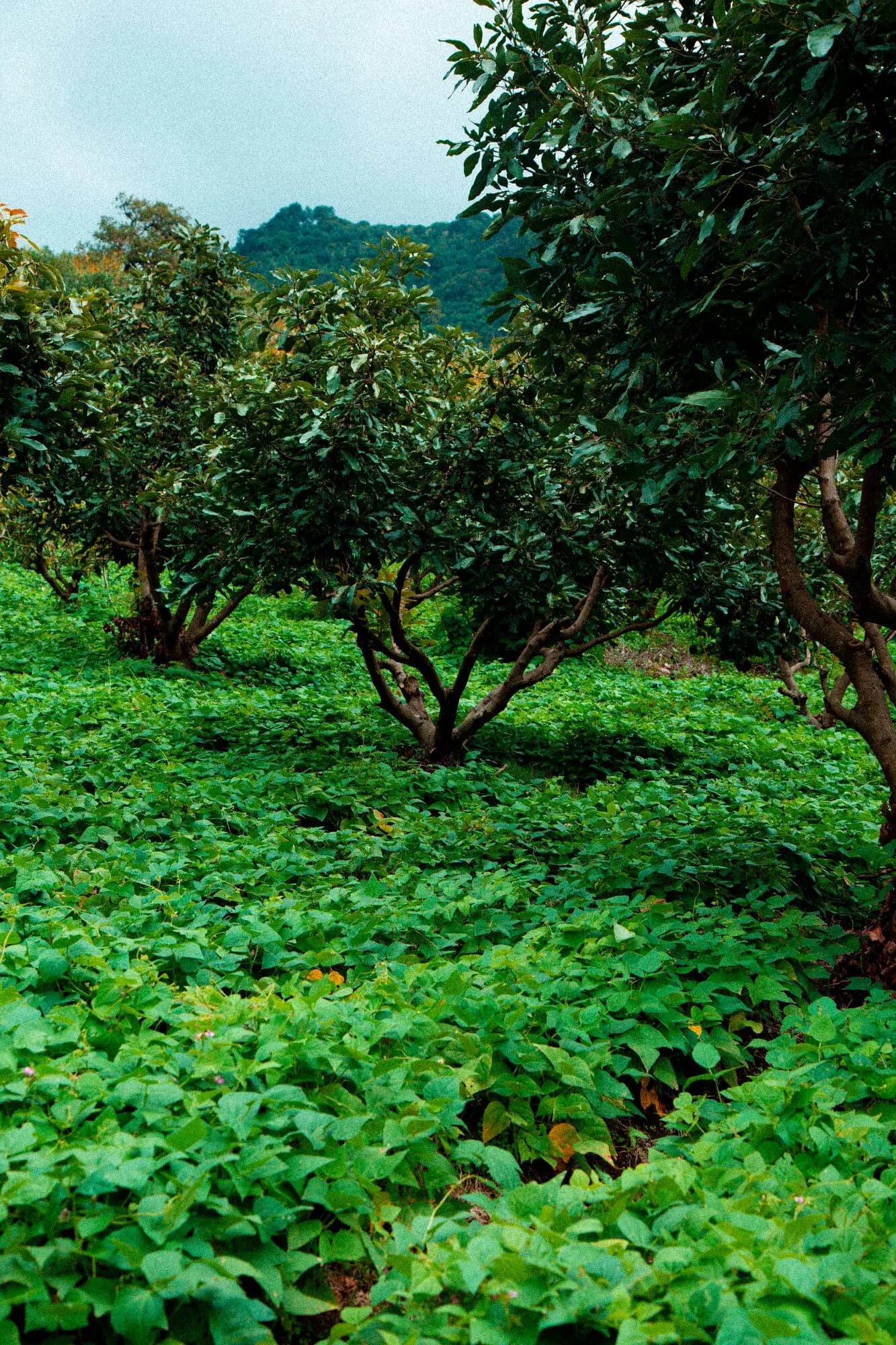
Green coffee is bought twice: first in the cup, then on paper. The first is looked after on the mountain, cherry by cherry; the second, with our own export license.
If you are a roaster or importer, let's talk green coffee: write to hola@chalabalestrella.com or on WhatsApp at +502 30121394. This land travels well.
Frequently asked questions
- What is the minimum quantity to import green coffee from Guatemala?
- You do not need a container to start. The Anacafé and FedEx program announced in 2020 took boxes of up to 68 kg on its standard services; if it is still running, a first order can be a few boxes. A 20-foot container holds 250 to 275 bags of 69 kg.
- When does new-crop Guatemalan coffee arrive in the United States and Europe?
- Guatemala harvests roughly from November to April, later in the higher zones. Most new-crop coffee ships between spring and summer in the northern hemisphere and reaches warehouses between spring and late summer: earlier in the United States, later in Europe.
- Do I need a license to import green coffee?
- In the United States, CBP does not require an import license; the FDA requires Prior Notice before each arrival and FSVP compliance, and you need an importer of record. In the European Union you need an EORI number and, under the EUDR timeline, a due diligence statement; check the current measures for subheading 0901.11 in TARIC.
- How much does a sack of Guatemalan coffee weigh?
- 69 kilograms (152 pounds). It is the standard export bag for Guatemala and most of Central America; Panama uses 60 kg bags.
- Can I buy directly from a farm?
- Yes, if the farm holds an Anacafé Productor-Exportador license, which lets it export its own production. Farms without one sell through licensed Comprador-Exportador exporters. Chalabal Estrella holds a Productor-Exportador license and exports its own coffee.
Sources
- Anacafé: Export Guide for the Guatemalan Coffee Sector (in Spanish: licenses, shipping permit, certificates, samples, C contract)
- Anacafé: Anacafé and FedEx partnership for shipping micro and nanolots (2020, in Spanish)
- Anacafé: post-harvest process guide (10 to 12% moisture, in Spanish)
- Anacafé: Guatemalan coffee in figures 2018-2019 (SHB, HB and Prime export types, in Spanish)
- USDA FAS GAIN: Guatemala Coffee Annual (April 2026)
- Royal Coffee: bag weights and bags per container by origin
- Cafe Imports: a bit about coffee grades (trade definition of EP)
- Specialty Coffee Association: Washed Arabica Green Grading Form (350 g sample)
- Mercanta: coffee seasonality by origin (Guatemala harvest and shipping)
- InterAmerican Coffee: Guatemala new-crop arrivals in the United States
- iContainers: transit times from Santo Tomás de Castilla
- FDA: What you need to know about Prior Notice of imported food shipments
- FDA: Foreign Supplier Verification Programs (FSVP) final rule
- 21 CFR 1.507: food that cannot be consumed without an appropriate control (includes coffee beans)
- 21 CFR 1.509: identification of the FSVP importer at each entry
- USITC: Harmonized Tariff Schedule of the United States, subheading 0901.11
- CBP: importing and exporting tips (importer of record, licenses)
- CBI (Netherlands Ministry of Foreign Affairs): what is the demand for coffee in Europe (no duties on green coffee)
- European Commission, Access2Markets: guide to importing goods (EORI and VAT)
- European Commission: EUDR frequently asked questions (plot geolocation)
- European Parliament, Legislative Train: targeted amendments to the EUDR and application dates
- International Chamber of Commerce: Incoterms 2020
- Logistics Cluster: Port of Puerto Quetzal
- Logistics Cluster: Port of Santo Tomás de Castilla
- Anacafé: 2020-2021 Regional Competitions winners, Acatenango Valley category (ranking published without scores, in Spanish)
- Anacafé: 8th Regional Competition, Región III, 2021-2022 harvest (in Spanish)
- Anacafé: 10th Coffee Competition, Región III, 2023-2024 harvest (in Spanish)
- Anacafé: 11th Coffee Competition, Región III, Acatenango Valley category (May 2025, in Spanish)